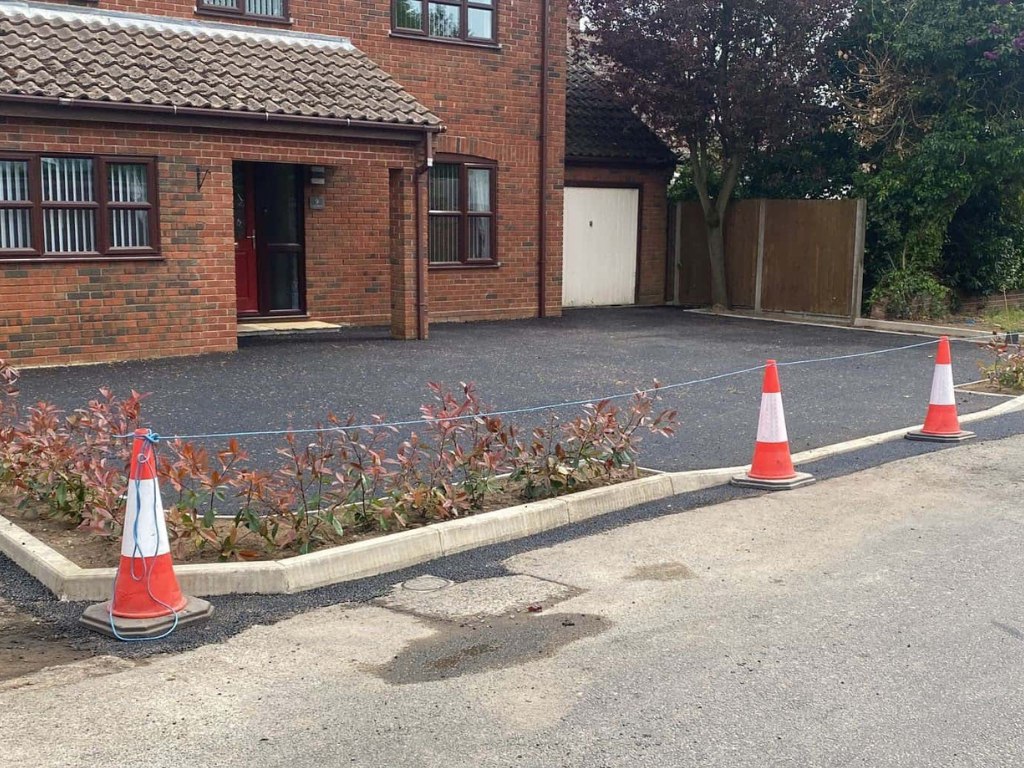
Tar & Chip for New Builds: Planning Driveways, Roadways and Access Areas
When planning a new-build property, the external areas are just as important as the building itself. Driveways, private roadways and access areas need to provide reliable surfaces for everyday use while fitting naturally into the surrounding property.
Tar and chip surfacing can be a practical option for suitable new-build projects. Combining a bituminous binder with stone aggregate, it creates a textured surface that can work across a range of outdoor applications. For property owners in Sawston, Cambridgeshire, careful planning is essential to ensure the finished surface is appropriate for its intended use.
What Is Tar & Chip Surfacing?
Tar and chip, sometimes referred to as chip seal, is produced by applying a bituminous binder to a prepared surface before placing selected stone aggregate over it. The aggregate becomes embedded into the binder, creating a stable surface with a distinctive textured appearance.
The finished result can be adapted through the choice of aggregate, making it possible to achieve a practical surface that also complements the character of a new property.
Planning a Tar & Chip Driveway
A driveway should be planned around how it will be used. Vehicle movements, turning areas, access requirements and the layout of the property all need to be considered before installation.
For a new build, planning the driveway at an early stage can help ensure that the finished surface connects properly with entrances, garage areas and surrounding landscaping. Appropriate levels and drainage should also be established before surfacing begins.
Tar & Chip for Private Roadways
Where a new development or property requires a private roadway, tar and chip can provide a suitable surface when the underlying construction is properly designed for the expected use.
Roadway planning should consider vehicle access, surface levels, drainage and the strength of the supporting ground. These factors help determine the appropriate preparation and construction method for the finished surface.
Access Areas and Turning Spaces
New-build properties may require more than a straightforward driveway. Access areas, parking spaces and turning points can all be incorporated into the overall surfacing plan.
Tar and chip can be considered for these areas where its characteristics are suitable. Creating clearly defined access and turning zones can also help improve how vehicles move around the property while keeping the layout practical.
Why Ground Preparation Is Important
The quality of a tar and chip surface depends heavily on the preparation beneath it. New-build sites can contain areas of disturbed or recently worked ground, so the condition and stability of the proposed surfacing area need to be considered carefully.
Suitable groundwork may include establishing the correct levels, removing unsuitable material and constructing a stable sub-base. Without proper preparation, the finished surface may be more susceptible to movement, cracking or uneven areas.
Drainage Should Be Considered Early
Effective drainage is an important part of planning any new driveway or access surface. Rainwater needs to be directed away from the surfaced area rather than allowed to collect in low points.
For new-build projects, drainage can be incorporated into the wider site design before the final surface is installed. Considering this early can help create a more effective and durable finished layout.
Choosing the Right Aggregate
The aggregate used for tar and chip contributes significantly to the appearance and performance of the surface. Different stone sizes and colours can create different finishes.
The aggregate should be selected according to the intended application as well as the desired appearance. A professional surfacing contractor can advise on suitable options based on the requirements of the project.
Coordinating Surfacing with Landscaping
Driveways and access areas are often positioned alongside lawns, planting areas, paths and other landscaping features. Planning these elements together can create a more cohesive finished property.
Edging can also be incorporated where appropriate to provide a defined boundary between the tar and chip surface and surrounding areas.
Maintenance for New Tar & Chip Surfaces
Once installed, regular care can help maintain the condition of the surface. Keeping drainage routes clear and removing accumulated debris can help prevent avoidable issues.
It is also sensible to monitor the surface for loose aggregate, cracking or areas where water begins to collect. Early attention to developing problems can help maintain the surface over time.
Professional Tar & Chip Surfacing in Sawston, Cambridgeshire
For new-build projects in Sawston, Cambridgeshire, Sawston Driveways can provide professional advice on tar and chip driveways, roadways and access areas.
Assessing the site before work begins allows important factors such as ground conditions, drainage, access requirements and intended use to be considered as part of the surfacing plan.
Conclusion
Tar and chip can be a versatile option for suitable new-build driveways, roadways and access areas. However, the long-term performance of the surface depends on careful planning, stable groundwork, effective drainage and appropriate installation.
If you are planning a new-build surfacing project in Sawston, Cambridgeshire, contact Sawston Driveways to discuss your requirements and arrange a professional assessment.
Call us on: 01223 857 079
Click here to find out more about Sawston Driveways
Click here to complete our contact form and see how we can help with your driveway needs.